 Call us
 Email us
How to Collect and Buy Art: The Basics
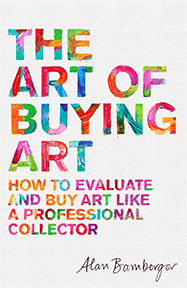
Note: This article is taken from a speech originally given to an audience of art collectors at the Indianapolis Art Center. It covers a number of topics that are treated at length and in detail in my book, THE ART OF BUYING ART.
***
Anyone can buy and collect art intelligently. That's right; I said anyone. No previous knowledge of the art business, experience collecting art or degrees in art history are necessary. All you need is a love and appreciation of fine art, a desire to collect, and a willingness to familiarize yourself with a few simple techniques that will allow you to assess and evaluate any work of art dating from any time period by any artist of any nationality.
Even though the following article contains recommendations and suggestions relating to particular works of art, keep in mind that there is no right or wrong art and there is no right or wrong way to buy or collect art. Anyone can collect whatever they feel like collecting or buy whatever art they feel like buying, wherever and whenever they feel like buying it, for whatever reasons they decide to buy it, and for however much money they feel like spending on it. Consequently, these techniques are not for everyone; they're mainly for people who like to spend their money wisely and who prefer to pay fair prices for quality works of art. If that happens to be you, then what you're about to read will help you become a better collector.
Suppose you see a work of art for sale that you like-- a painting, a sculpture, a print-- it makes no difference. If you like it so much that you think you might want to own it, begin your decision-making process by asking and answering four basic questions.
1. Who is the artist?
2. How significant is the art?
3. What is the art's provenance, history, and documentation (or more simply, where has the art been and who's owned it)?
4. Is the asking price fair?
Let's take a more in-depth look at each one of these questions individually...
Who is the artist?
For the answer to this first question, you rely on two basic sources of information, spoken and written. The spoken part usually comes from the artist, dealer or gallery who either represents or sells the art. Verbal information can also come from friends, collectors and others who are familiar with the art or artist in question.
Printed information comes in a variety of forms including artist websites, gallery websites, online artist database resources, gallery exhibition catalogues (either online or printed), artist career resumes, exhibition reviews (either online or in hard-copy publications), and art reference books, websites and databases including dictionaries of artists, art indexes, art or artist encyclopedias, monographs on artists, and art surveys or histories. In the large majority of cases, much of this information is available from whomever is selling the art.
In all cases, you want to both hear and read about the artist you're interested in. Do one without the other and you can easily come away with inaccurate or skewed ideas or information about how significant the art or artist really is. The types of information you come across during the course of your readings and listenings, no matter what artist you are learning about, include facts like the following:
* The artist's birth date and death date (if applicable).
* Where the artist lives and works.
* Galleries, museums or institutions where the artist has exhibited art either in one-person shows or in group shows with other artists.
* Awards, prizes, grants and honors that the artist has received.
* Public, private or corporate collectors who own the artist's art.
* Positions the artist has held (resident artist, professor, teacher, lecturer, writer, and so on)
* Publications that mention the artist such as online art sites, books, catalogues, art magazines and so on.
* Organizations the artist belongs to.
* Where, when and with whom the artist studied.
You use this information to make basic conclusions about the artist... nothing complicated, nothing overly scholarly or academic. You merely want to come away with a reasonable idea of who the artist is and how significant his or her accomplishments are. Knowing how to assess an artist's career information becomes increasingly important the more expensive or significant the art is that you're thinking about buying. Basically, the more art costs, then the more respected, established and documented the artist should be. This holds true with art as well as it does for any other significant expenditure in life.
Would you buy $35,000 car off of a show room floor, no questions asked? Would you buy a $700,000 house by standing in the front yard, simply by looking at it and deciding it's exactly what you want? Of course not. You read about the car, ask people who own it how they like it, compare prices from dealer to dealer and so on. You tour the house, carefully inspect every room, find out what kind of neighborhood it's in and what comparable houses are selling for, have the house inspected by a contractor and so on. In both cases, you want to know what you're getting before you spend your money, and the same holds true for art. With a work of art, this process begins by evaluating basic facts about the artist like those mentioned above. As for conclusions based on those facts, the following generally hold true:
* The more extensive the artist's profile, online and otherwise, the better. Yes, the artist's website is important as are galleries that exclusively represent the artist, but equally important (or perhaps even more so) are third-party websites that review the artist's work, feature the artist, offer the art for sale and so on. These might include gallery websites, museum websites, arts publication websites and other sites with profiles or standings in the arts community.
* The more books, catalogues and online resources that list, mention or discuss the artist, the better.
* The more significant the publications or online resources that include the artist, the more important the artist tends to be. For instance, a five-paragraph listing in a major international artist dictionary or biographical database carries more weight than a similar length listing on a local artist website or directory. Likewise, a feature article, interview or blog on a significant website carries more weight than a one-sentence reference.
* The more mentions the artist has on a website or publication and the longer those mentions are, the better. An illustrated feature or page or interview about an artist is better than a feature or page without illustrations, is better than a paragraph, is better than a sentence, and so on.
* The longer the artist has been creating and exhibiting art, the better. A 55 year old artist with accomplishments dating back 30 years tends to be more respected and established than a 55 year old artist who's only having their second show.
* The greater the number of exhibits, awards and other career accomplishments an artist has received, the better. Keep in mind that overblown verbiage about an artist's majestic brush strokes or mastery of color may sound great, but flowery language is pretty much meaningless unless it includes factual information. Never confuse facts with fluff, and always be aware that in the art business there's never any shortage of fluff.
* The more significant the collections that own an artist's art, the more important the artist tends to be. When museums own the art, that's always a good sign; major corporate collections are generally good for an artist to be in; private collections only carry weight when the collectors are known and respected in the art community. A painting in the collection of the Countess Esmiralda of Stregovia, for example, may sound impressive, but the distinction is only significant if the Countess is recognized for the quality of her art collection.
* Artist listings in scholarly or non-biased arts publications, either online or hard-copy, are preferred over those in commercial publications. Always be wary of books, catalogues or websites published or controlled by special interests, no matter how lavish they may be. For instance, if you are shown a glamorous ten-pound coffee table book about an artist that's published by the gallery selling the art, but you don't find that artist regularly listed or included in other standard art reference books or online resources, this could mean that the artist is considered famous and accomplished only at that gallery and nowhere else.
* The more people who recognize the artist's name and have good things to say, the better. The more qualified these people are and the more respected they are in the arts community, the more you should value their opinions, especially when they have nothing to gain if you buy the art.
How important is the art?
This second question is answered by looking at as much art by the artist as possible, familiarizing yourself with the range of that art, and learning how to cross-compare the art you're interested in with other art by the artist.
Begin by having the artist or seller show you a selection of the artist's art, either firsthand, online, in print, or from photographs, and from all periods in the artist's career. When that's not possible, find out where you can go to see this art. Knowing the full range of an artist's work helps you to better understand each individual piece in its proper context. This is why art galleries present solo shows and inventory multiple works of art by the artists they represent. The more pieces they have on hand to show you, the better they can inform you about the artist and his or her art.
Next, thoroughly inspect the art you're interested in. In addition to the front, look at the back, sides, edges, signatures, dates, any writing that's on them, any labels or stickers you find, frames, construction, everything. Have the artist or seller explain all these details. This exercise is not only fascinating and educational, but it also gives you greater insight into what the art is all about and, incidentally, how much the artist or seller knows (or cares) about whatever he or she is selling.
Ask the artist or seller whether the art is original or reproduced by mechanical means. This question is especially important with limited edition prints, giclees in particular. Many limited edition "works of art" are little more than digital or photo-reproduced copies of originals that are printed not by the artists who sign them, but by digital printers or commercial publishing companies. Believe it or not, many signed and numbered prints and digital images like giclees, fall into this category. The only thing original about these "copy prints" are the hand-applied signatures.
Some publishers take reproductions to the extreme. New Erte editions, for example, continued to be released even after the artist's death. Now that's the sign of a truly great artist-- one who can continue to produce art even from the grave. Always remember that when you're looking at a limited edition, ask whether it's a reproduction or an original and get the answer in writing. If you happen to like the way an image looks and you don't mind that it's a reproduction or copy of an original work of art, go ahead and buy it. But if you want to collect original works of art, collect ones that are entirely created and produced by the artists themselves. Reproductions of originals, by the way, no matter how limited or beautiful they are, are among the least significant and collectible examples of an artist's work.
Assuming the art you're interested in is original, find out whether it's "major" or "minor," that is, whether it's more or less significant when compared to other examples of the artist's art you've been looking at. Is it closer to the most complex, detailed, labor-intensive, high-end pieces that the artist is capable of creating, or is it more like a two-minute pencil sketch done on a three-by-five card? Keep in mind that major works tend to be more expensive, more valuable, more collectible, and fare better in the marketplace over time than minor ones.
Determine whether the art you like is "typical" or "atypical." Ask the artist or seller (and other informed individuals) which subjects, mediums, sizes and styles the artist is best known for producing and that collectors prefer or tend to buy the most. These pieces are referred to as typical. The large majority of artists also experiment, go off on tangents, and create unusual or one-of-a-kind items they're not well-known for. These pieces are referred to as atypical. Unless you're a sophisticated collector who wants examples of everything an artist has ever created or produced, stick with the typical and save the offbeat or unusual works for later.
Find out when in the artist's career your art dates from. All artists go through periods or phases where their art is more or less inspired, competent, appealing to collectors, in demand, and important in relation to their overall output. Experienced collectors, of course, prefer the best art from the best time periods. Learn what that means for your favorite artists and how the art you're looking at stacks up in comparison.
On a bit more of a sophisticated level, determine whether the art you're looking at has any unique original qualities or whether it's a re-do of styles or subject matters that have been produced over and over again for years. Some artists specialize in versions or styles of art that have already been done because they're good at it, people like how they look, and they sell well. From a collecting standpoint, art with unique or original aspects tends to be more collectible over time than art that imitates or borrows heavily from other artists or styles of art. Experienced collectors prefer buying works of art that reflect superior creative abilities, vision and originality, as well as mastery of medium. They patronize artists who continually evolve in their careers and galleries who represent those types of artists. If, however, you prefer art that mimics famous styles of the past, then by all means buy it. Remember... there's no right or wrong art.
Lastly, make sure the art you're looking at is in good condition and built to last, even if it's brand new. I was once in a gallery that was showing an artist who made reverse paintings on glass. The paintings were beautiful, but would they last? I had the dealer show me several pieces from the back so that I could see whether the frames and backings were adequately shock resistant and protective of the paint. I wouldn't want to buy one of these $5,000 pictures, accidentally bump it, and have it chip or crack because it's not well protected.
What is the art's provenance, history and documentation?
The answer to this question is determined by assembling all incidental information about the specific piece of art that you're thinking about buying. The process is almost like writing the biography of the art from the moment the artist completed it right up to the present day.
You do this because good documentation and provenance increases a work of art's collectibility, desirability, market value, and most importantly, conclusively proves it's by the artist whose signature it bears. Good provenance in the art world is similar to a good pedigree in the pet world. A painting that was exhibited at an important art show, for example, is more collectible than a similar looking painting that wasn't; a sculpture that won a prize is more desirable than a similar sculpture that didn't; a watercolor that made the news because of its controversial subject matter is more interesting to collectors than a similar watercolor that didn't. If art you are considering possesses any such characteristics, you should know about them.
Begin by asking the artist or seller to tell you everything he or she can about the art you like. Find out where it's been, what it represents, how it came into being, who's owned it, whether it's been exhibited, won awards, or been pictured or mentioned in any books, catalogues, articles, or reviews. Has it ever been discussed online or in print by experts or by the artist himself? Does it commemorate special events either within or outside of the artist's life? Are any interesting stories associated with it? These are the types of questions you should ask. The answers are often entertaining, enlightening and just plain fun.
Whenever the art is by a living artist, ask the artist to tell you about it. If the art is for sale at a gallery and the artist isn't available, ask the gallery owner whether you can make an appointment to speak with the artist either in person or over the phone.
In addition to what people tell you, put together as much physical documentation as possible from online or printed sources such as those mentioned previously in this article. These include printouts, copies or photocopies of entries in publications or online that mention the art, certificates or statements of authenticity, and whenever possible, signed statements from the artist and/or gallery detailing what they've told you. It's kind of like art is the visual component; the documentation is the rest of the story.
At all times, keep truth separated from fiction. Gossip, third-party suppositions and hearsay do not qualify as provenance. Make sure everything you're told actually happened. When a story cannot be conclusively proven or verified with concrete tangible evidence, don't take it seriously.
Suppose for example you're thinking about buying an antique painting with a mountain in it. The dealer says he heard that Teddy Roosevelt's plumber's grandson once owned it. He also says the mountain is Mount Shasta and proves it by showing you photographs of the mountain taken from the same angle as is depicted in the painting. The statement past ownership is conjecture and must be proved in order to be taken seriously; the second statement is fact if the photographs and the painting match up exactly.
Is the asking price fair?
Assuming the art is still under consideration at this point, now comes the time to talk money. Evaluating an asking price is not so much a question of what the art might be worth at some point in the future or whether it's a good investment; nobody knows those answers. What you want to know is whether it's priced fairly today. It's a question that must be asked and evaluated because like any other goods or services, art can sometimes be overpriced.
Regardless of what an artist or gallery owner tells you when you ask about a price-- like for instance that every work of art is unique or that the price is exactly what it's worth (whatever that means)-- that kind of logic doesn't wash with anyone who's been around collecting or the art business for any length of time. Art is like real estate in that an individual piece may indeed be unique, but plenty of other pieces are similar or comparable to it, either by the same or similar artists. Those comparables-- like similar houses in the same neighborhood, so to speak-- are what you look at when evaluating the price of the art you're thinking about buying. As for being told an asking price is "what the art is worth," that's not necessarily true either. The asking price might be fair, it might be a bargain or it might be ridiculously high, and it's up to you to figure out which it is.
Contrary to what many people believe (or what some artists or gallery owners might want you to believe), art prices are not mysteriously pulled out of thin air or divined by some incomprehensible sixth sense that only artists and art dealers possess. Once you learn the basics, evaluating the price of most works of art becomes no more complicated than pricing milk in a grocery store. All you have to do is a little comparing and contrasting between the art you're thinking about buying and records of public and private sales of similar works of art that have already been sold.
Of course, in order to do that, you must first be aware that such records exist; many people have no idea they can actually research art prices by locating previous sales records. Not only do such price records exist, but they exist by the millions, in many cases go back several decades or more, are available in huge online databases (that generally charge for access) and often on gallery, artist and secondary (resale) art market websites as well. At auction alone, well over 300,000 new sales results per year are added to the major databases.
Begin your price research with the artist or seller. Ask to them to tell you about or better yet show you recent sales results for art by whatever artist you're interested in, particularly results for pieces similar to the ones you're thinking about buying. Make sure the artist has a track record of selling works of art similar to the piece you like for amounts comparable to what you're being asked to pay. Most dealers have this information on file and will talk about it with you (be careful when any dealer is in any way reluctant or evasive about discussing previous sales).
The other part of evaluating prices is to find out what's happening outside of the gallery or artist selling the art. Where else does the art sell and how much does it sell for? These sales may take place at other galleries, at auctions, online at secondary art market websites, or at all of the above, and once again, you should look for consistency in selling prices that are comparable to what you're being asked to pay. For instance, if the price you're being asked to pay is significantly higher than prices you're finding elsewhere on the Internet or in the marketplace, you'll need to find out why.
Checking auction records is easy; anybody can do it. All you have to do is look up the artist's name in online art price databases (most of which are only available by subscription) to see whether any of his or her art has sold. Some databases are free, most major auction houses now allow you to search and access past sales results at no charge, some of the pay sites show basic information about what's sold, but you have to pay to see the actual selling prices and listing details. Each sales record you find tells you information like what type of art sold (painting, sculpture, etc.), it's size, title, when and where it sold, and how much it sold for.
When an artist has auction records, that indicates the artist has achieved a certain level of recognition and respect within the art community, generally speaks well for the artist's overall market, and indicates that the art has in a sense "ascended" to the level of currency. Instead of collectors asking "Who's that?" when they see the artist's art, they say "I know who she is. Her art auctions for X amount of dollars, and I'd pay this much to own a piece of her art."
The most significant auction records for your purposes are those for works of art that are similar in size, subject matter, medium, date executed and other particulars to yours. Keep in mind that auction prices represent wholesale values more so than retail ones, so don't expect them to be as high as what you're being asked to pay at a gallery or directly from the artist. Do, however, expect them to be in the vicinity of 35-40% of gallery retail and preferably higher. If you find auction records that are 30% or less of what you're being asked to pay, this may be cause for concern. Either the artist or gallery owner should have a good explanation as to why the discrepancy is so large or you should consider shopping elsewhere.
As for locating retail gallery asking and selling prices for comparable works of art to whatever you're considering buying, the Internet has completely changed the playing field in that regard. In the old days, locating comparables on the retail market was not easy, and finding asking and selling prices was harder yet. These days, you can see what's available for sale in many cases, contact the sellers and ask how much particular works of art are selling for. With many sellers, you can also discuss the overall market for the artist, past sales, demand for the art, and other details. Not all sellers will answer your questions or give you the information you're looking for, or require you to give up personal information before they tell you anything, and when that's the case, simply thank them and move on.
Several additional tips for evaluating asking prices and auction records are as follows:
* Check back through at least five years of sales records and look for indications that the artist's prices either hold steady or increase over time. Consistent strength in selling prices means that demand for the art is solid and that the collector base is strong. Fluctuating, erratic, or declining prices are not generally a good sign.
* Pay the most attention to where the majority of the price results fall, not the minority. For example, if you're thinking about paying $10,000 for a painting and you find one auction or sale price record of $6,000 and twenty for under $2000, be careful. The $10,000 painting may be overpriced, and unless the seller can provide you with concrete reasons for that price, perhaps it's best to wait.
* The more auction results you find, the more accurately you can evaluate prices. One or two isolated sales are not enough to base any solid conclusions on; you need at least five to ten records to work from and preferably more.
Retail sales at other galleries, both online and at bricks-and-mortar locations, are just as important to know about as auction records and even more so when you have little or no auction records to go on. You can often learn about these sales by speaking with various dealers, collectors and knowledgeable people in the arts community about the artist you are interested in. Again, the names of these individuals and businesses are often easy to find online. The more dealers who either handle work by the artist, recognize the name, or are willing to handle work, the better. Hopefully, their asking prices and past sales records will be comparable to what you're being asked to pay. When few galleries are familiar with an artist or are interested in handling his or her art, this may not be a good sign. But if you're in love with the art regardless, making that final decision is entirely up to you. Once again, there is no right or wrong way to buy art.
If you're thinking about buying directly from an artist who does not exhibit regularly, you often find few if any galleries that recognize the name and few if any auction records. In these cases, ask the artist for information about people or institutions that own his or her art and once again, do your best to find out whether that art has sold (hopefully on a regular basis) for prices comparable to what you're being asked to pay. The more collectors who own the art and the more consistent the selling prices and frequency of sales, the more comfortable you can feel about buying.
In cases where you have little or no auction or gallery prices to go on, you can sometimes extrapolate values from auction records and retail prices of similar art by artists from the same geographical region who have similar career accomplishments, similar market bases, produce art in similar styles or subject matters, and were or are active during similar time periods. Evaluating prices in this manner is another form of working from comparables. When you're buying from an artist, for example, find out what other artists who produce similar work and live in the same area charge for their art. If you're buying older art like a landscape dating from the 1940's, compare the asking price to prices of similar 1940's landscapes by other artists who painted in the same region or area.
Once you're comfortable with an asking price and ready to buy, make sure you get a detailed receipt describing the art, its physical characteristics, its condition and a money back guarantee to protect you if, at any point in the future, you find out that the art was not properly represented. This receipt should be in addition to all other documentation the seller provides relating to the art's history, provenance and authenticity.
A quick word about bargaining. Suppose for some reason you still want the art after all's said and done, but would rather pay a little less for it. Art prices are often negotiable and making an offer is certainly an option, but don't bargain purely for the sport of it. Make sure you have a good reason for wanting a better price and can make a reasonable case for your request. Experienced collectors do this all the time. They know artists or dealers are much more likely to reduce prices based on good solid arguments than they are just because buyers want better deals. Do not bargain just to see how low you can get the price though. That tact will only come back to bite you.
All this effort to buy a single piece of art may seem a little tedious as you read about it here, but in fact it's just the opposite. Buying art intelligently not only becomes second nature once you get good at it; it also becomes an adventure. Once you get the hang of how things work, your quest for knowledge turns into exciting detective work, and so much of what you discover is always rewarding. Experienced collectors, like you may one day become, can research and evaluate most works of art in as little as a few minutes. For them, the importance of knowing about a work of art, including the fact that it's priced fairly, cannot be underestimated. Having this knowledge not only increases their enjoyment and appreciation of that art, but also their engagement with art and the art world in general.
Since you've read this far, kindly indulge me while I engage in one last bit of shameless self-promotion and remind you that my book, THE ART OF BUYING ART, SECOND EDITION is available for purchase and goes into much more detail than what you've been reading here. Click the link to read chapter summaries and proceed to the Order Form if you like what you see. This article is only the beginning; the book elaborates on everything you've just read and much much more. Plus it's written for anyone who likes art regardless of how little or how much they know about art to begin with. All that's required is a desire to own art and to buy like experienced collectors and fine arts professionals buy their art all the time.

(art by Noam Rappaport)

Current Features
- How to Buy Art on Instagram and Facebook
More and more people are buying more and more art online all the time, not only from artist websites or online stores, but perhaps even more so, on social media ... - Collect Art Like a Pro
In order to collect art intelligently, you have to master two basic skills. The first is being able to... - San Francisco Art Galleries >>